

Treatment of stress urinary incontinence
Urination in women is a common complaint, with age the number of cases increases. This problem is radically solved by minimally invasive surgical TVT-mixing.

Minimally invasive functional gynecology at Olympus Clinic can significantly reduce the time of surgical intervention, eliminate the cause of pathology, reduce the risk of tissue damage and speed up the patient’s rehabilitation process.
Benefits
Short-term recovery period
Patients quickly return to normal life, often the very next day after surgery.
Minimal invasiveness
The procedure requires only small incisions, which reduces the risk of complications and shortens recovery time.
High efficiency
Most women report significant improvement or complete disappearance of urinary incontinence symptoms after the procedure.
Long-lasting result
The effectiveness of the TVT intervention persists for many years after surgery.
Consultation
During the initial consultation, the gynecologist-surgeon conducts a clinical examination of the patient. A comprehensive diagnosis is prescribed: general urine analysis, serological tests (back-sowing, urine culture for microflora), uroflowmetry, cystoscopy, ultrasound of the bladder, MRI of the lumbar spine. If surgical intervention is necessary, preparations for elective surgery begin.

Operation
Surgical treatment of urinary incontinence using the TVT-O method is minimally invasive, therefore it takes about 15 minutes. TVT intervention is performed under general or spinal anesthesia. During the procedure, a special tape is inserted through small incisions in the vaginal area and above the pubis, which supports the urethra in the correct position, preventing involuntary urine output. Discharge usually takes place 1-2 days after surgery.

Rehabilitation after treatment of urinary incontinence
After the operation, prescriptions and recommendations from the attending gynecologist are issued. A woman can return to her normal lifestyle immediately after surgery. There is practically no pain syndrome, you can go back to work literally a couple of days after discharge. Mandatory conditions for successful recovery after sling surgery are sexual rest and limitation of physical activity for 1.5-2 months.
Врачи
Смотреть всех врачей
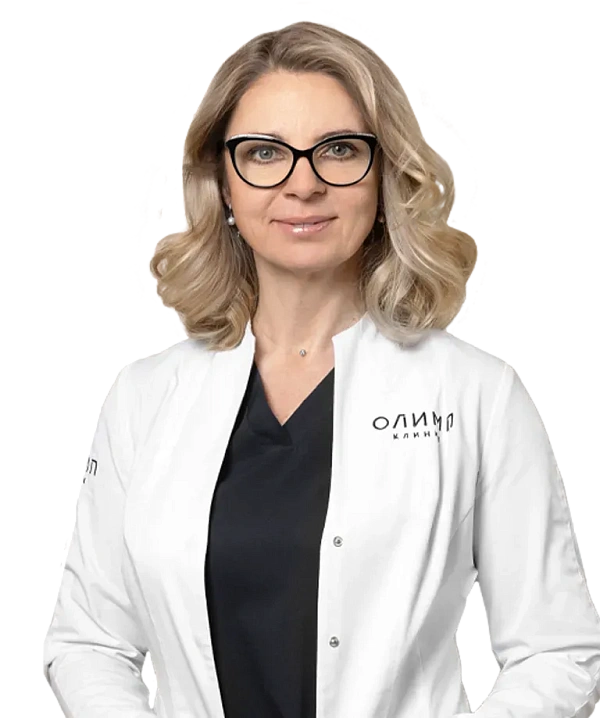
Doctor of the highest category, surgical obstetrician-gynaecologist specialising in anti-age and bioregenerative medicine, oncologist

Gynecologist, endoscopic surgeon. Head of the gynecology department.
Indications and contraindications
Indications
Acquired stress incontinence
Involuntary urine allocation caused by stress
History of childbirth with complications
Childbirth accompanied by pelvic floor injuries may increase the risk of stress urinary incontinence.
Inefficiency of conservative therapy
The absence of a long-term positive effect from the use of medications, physiotherapy and exercises to strengthen the pelvic floor muscles.
Menopause
Changes in hormone levels and loss of tissue elasticity associated with menopause can exacerbate the symptoms of urinary incontinence.
Expected effect
Relief from physical discomfort
From 30 to 50% of women who give birth face the problem of urinary incontinence. This number increases to 60% by menopause.
Returning the functionality of the intimate area
Stress incontinence causes two interrelated processes: damage to the ligaments that support the uterus, bladder, urethra, and weakness of the pelvic floor muscles. Moreover, a decrease in the tone of the vaginal muscles and pelvic diaphragm leads to prolapse of the walls of the vagina and uterus.
Elimination of symptoms
The procedure helps to significantly reduce or completely get rid of involuntary urine output.
Improving the quality of life
Improvement of emotional state and social activity by eliminating discomfort and inconvenience.
Similar referral activities
Consultation of a gynecologist
Medical examination aimed at diagnosing, treating and preventing diseases of the female reproductive system.
Removal of tumors in the intimate area
A procedure aimed at eliminating benign growths such as papillomas, warts, cysts and genital warts.
Reproductive surgery
Surgical treatment and simultaneous accurate diagnosis of female infertility factors: adhesions, endometriosis, congenital malformations of the genital organs, obstruction of the fallopian tubes, intrauterine pathology (septum and synechia), polycystic ovary syndrome.
Cervical plastic surgery
Cervical plastic surgery (tracheloplasty) is a surgical restoration of the anatomical structure and function of the cervix, which helps to maintain the health of the reproductive system.
Treatment of vulvar diseases
Vulvar diseases, including chronic fissures, sclerotrophic lichen and other dermatological conditions. We offer modern and effective treatment methods aimed at reducing symptoms and restoring the normal condition of the vulva skin.
Correction of menopause problems
The onset of menopause is often accompanied by a number of physical and mental manifestations unpleasant for a woman. The gynecologist will choose therapy, which can relieve or completely eliminate the symptoms.
How to reach


- Route from the «Sukharevskaya» metro station
- Route from the «Tsvetnoy Boulevard» metro station
From the metro station "Tsvetnoy Bulvar"
1 exit to the city, then left to the Garden Ring, at the crossing to the right, crossing the boulevard, one more crossing and at the traffic light to the left. The Olymp Clinic building is located overlooking the Garden Ring to the right of the crossing. Travel time is approximately 9 minutes. Landmark - sign Olymp Clini
From the metro station "Sukharevskaya"
Exit 3 from the metro and 640 meters straight ahead, the clinic will be on the right. Landmark - sign Olymp Clinic
Parking lot map
Exit 3 from the metro and 640 meters straight ahead, the clinic will be on the right. Landmark - sign Olymp Clinic