

Myofascial release
Manual technique aimed at eliminating muscle and fascial strains, improving joint mobility and reducing pain.
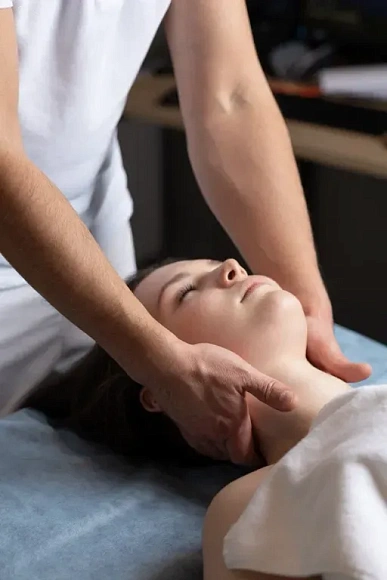
Myofascial release (MFR) is based on working with muscles and fascia — connective tissues covering muscles and organs. When exposed to trigger points (areas of increased tension) and fascial shortening, MFR eliminates spasms, restores normal blood flow and lymph flow.
The modern rhythm of life, sedentary work, lack of movement and stress often lead to impaired fascial gliding. This can cause pain and restrict mobility. Myofascial release relieves symptoms and eliminates the root cause of the problem, improving the connection between muscles and the central nervous system. MFR is useful for muscle imbalance caused by improper posture or prolonged exertion, as well as for recovery after training. It helps to eliminate hypertension, increase tissue elasticity and reduce the risk of injury.
Before the myofascial release session, the patient is recommended: Consult with your therapist or your doctor about the presence of contraindications. Avoid heavy meals 1-2 hours before the procedure.
The session begins with an assessment of the condition of the muscles and fascia. The specialist determines trigger points and areas of fascial tension using palpation. Depending on the patient's condition, methodical stretching, pressure or soft rotational movements are used. Massage rolls or balls can be used during the procedure, which enhance the mechanical effect. The technique of performing MFR also includes working with the patient's breathing: proper deep breathing helps to relieve tension and improve tissue interaction. The duration of one session is 30-60 minutes.
Massage rolls for a deep effect on the fascia. Massage balls for local study of trigger points. Vibration devices and other hardware.
After the MFR session, it is recommended to drink more water to improve metabolic processes and eliminate decomposition products. The patient may feel relieved after the first session, however, a course of 6-10 procedures is recommended to achieve a lasting effect. During the recovery period, it is advisable to continue to maintain body mobility: practice light exercises, avoid sudden loads and follow the recommendations of a specialist.
Elimination of muscle spasms Effectively relieves tension and restores mobility. Increased flexibility and improved posture Strengthens the muscular corset and improves coordination. Fast recovery after exertion Helps athletes get back to training faster. Complex impact Improves the general condition of the body, including the work of the lymphatic and nervous systems.
Врачи
Смотреть всех врачейHow to reach


- Route from the «Sukharevskaya» metro station
- Route from the «Tsvetnoy Boulevard» metro station
From the metro station "Tsvetnoy Bulvar"
1 exit to the city, then left to the Garden Ring, at the crossing to the right, crossing the boulevard, one more crossing and at the traffic light to the left. The Olymp Clinic building is located overlooking the Garden Ring to the right of the crossing. Travel time is approximately 9 minutes. Landmark - sign Olymp Clini
From the metro station "Sukharevskaya"
Exit 3 from the metro and 640 meters straight ahead, the clinic will be on the right. Landmark - sign Olymp Clinic
Parking lot map
Exit 3 from the metro and 640 meters straight ahead, the clinic will be on the right. Landmark - sign Olymp Clinic