

Metal self-ligating braces
Metal self–ligating braces are one of the types of systems for orthodontic treatment to correct dental pathologies. This technique makes it possible to work with each tooth individually, which helps to reduce the traumatic nature of the process.
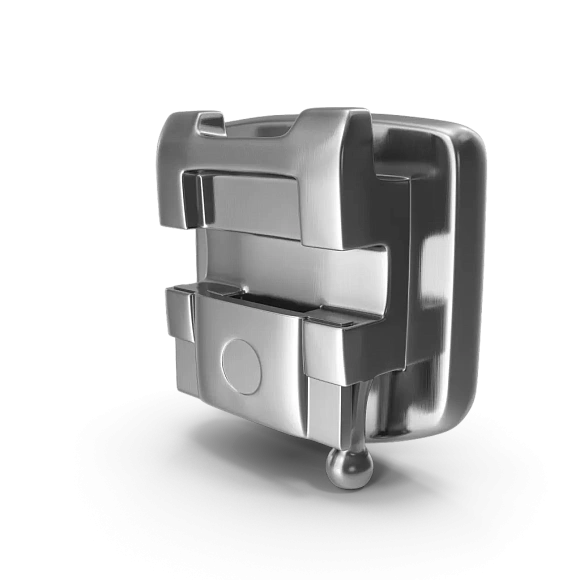
Self–ligating braces are modern orthodontic designs that allow for bite correction with increased comfort for the patient.
Benefits
Aesthetic result
A proper bite can make a smile more attractive
Long-term validity
Once treatment is completed, the results last for a long time
Individual approach
The orthodontic system is customized for each patient
Fewer visits to the orthodontist
Due to the more efficient movement of teeth, patients require fewer visits to the orthodontist to adjust braces.
Consultation before installing Metal self-ligating braces
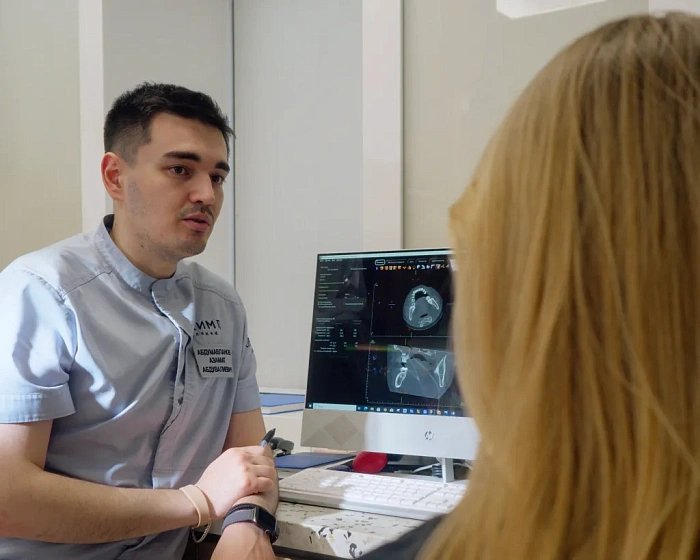
During the consultation, the doctor will examine your medical history, examine your bite, teeth, and take an X-ray. The doctor will also ask about your goals and expectations of treatment.
The procedure for installing Metal self-ligating braces
The installation of braces usually begins with cleaning and preparing the surface of the teeth. Then the doctor applies dental glue to each tooth and attaches braces to the teeth. After that, the doctor installs the arc using special latches. The orthodontist prescribes treatment monitoring visits.

Care after installation of Metal self-ligating braces
Proper braces care includes regular brushing of teeth and braces with a soft toothbrush and special toothpaste. You will need to use dental floss and interdental brushes to remove food debris. Do not eat chewy candies or hard foods to prevent damage to the braces. It is important to follow the recommendations of the orthodontist and visit him regularly for checks and adjustments.
Врачи
Смотреть всех врачей


Indications and contraindications
Indications
Improper bite
Abnormal closure of the dentition due to maxillofacial deformity
Teeth crowding
Tightly positioned teeth as a result of existing space deficits
Diastema, tremors
Gaps between teeth
Dental anomalies
Congenital or acquired abnormalities in the shape and length of the lower and upper dental arches
Сontraindications
Extensive demineralization of dental hard tissues
Allergic reaction to metal
The need for frequent MRIs of the brain
Serious gum problems or inflammatory gum disease
Expected effect
Improved chewing function
Aligning your teeth allows you to chew food more comfortably
Clear speech
A proper bite helps you pronounce sounds and words better
Pronounced cheekbones
Bite correction can make the face more symmetrical
Disease prevention
Helps prevent problems like tooth decay and gum disease by making it easier to care for your teeth and gums
Similar referral activities
Plastic bridles and cords
The plastic of the bridles and cords is considered minimally invasive manipulation in the dentist - surgeon's office. The essence of a gentle intervention is to truncate a thin fold of the mucous membrane.
Atraumatic removal of wisdom teeth
Wisdom tooth extraction is a surgical operation to extract the third molar from the dental alveoli. The peculiarity of the intervention is the difficulty of access, especially to the roots of the eights.
Zirconium crowns
Zirconium crowns are an orthopedic ceramic construction, which is made of a unique material - zirconium dioxide. It has excellent aesthetic and strength properties, as well as a long service life. It is installed on the front and side surfaces of the tooth, without requiring maximum turning
Prostheses on implants
Prosthetics on implants is an innovative method of restoring missing teeth. With a large loss of teeth, systems with an instant load are considered effective: all on 4 and all on 6. The patient immediately receives a beautiful smile and functional teeth.
All on 4
All-on-4 implantation is an effective alternative to removable dentures. The procedure involves placing four artificial implants in one jaw and attaching a denture to them.
All on 6
Implantation of all on 6 is an effective alternative to removable prostheses. The essence of the method is to install four artificial implants on one jaw with subsequent fixation of a fixed prosthesis on them.
How to reach


- Route from the «Sukharevskaya» metro station
- Route from the «Tsvetnoy Boulevard» metro station
From the metro station "Tsvetnoy Bulvar"
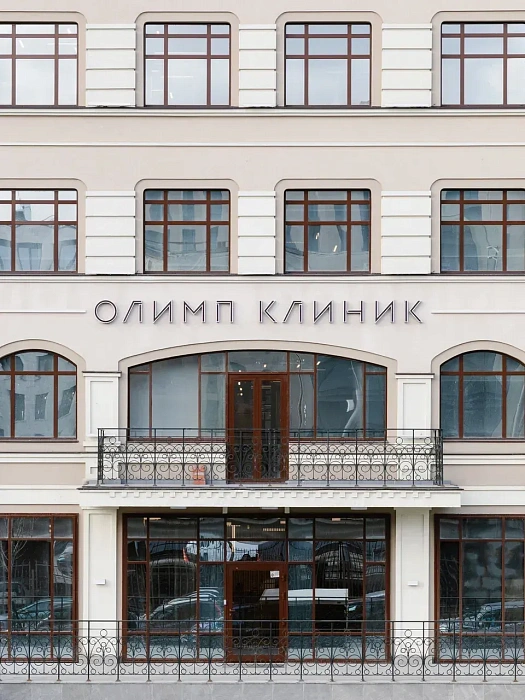
1 exit to the city, then left to the Garden Ring, at the crossing to the right, crossing the boulevard, one more crossing and at the traffic light to the left. The Olymp Clinic building is located overlooking the Garden Ring to the right of the crossing. Travel time is approximately 9 minutes. Landmark - sign Olymp Clini
From the metro station "Sukharevskaya"
Exit 3 from the metro and 640 meters straight ahead, the clinic will be on the right. Landmark - sign Olymp Clinic
Parking lot map
Exit 3 from the metro and 640 meters straight ahead, the clinic will be on the right. Landmark - sign Olymp Clinic