

Fibroendoscopy of the nose, nasopharynx, larynx
A highly informative and safe research method using a flexible fibroendoscope equipped with a video camera and a light source. It allows you to visualize the mucous membrane of the nose, nasopharynx and larynx, identify inflammatory processes and other pathologies.
Diseases of the nose, nasopharynx and larynx can manifest as nasal congestion, chronic runny nose, sore throat, hoarseness and difficulty breathing. The causes of diseases can be pathological changes such as inflammation, polyps, tumors and anatomical abnormalities.
Before fibroendoscopy of the nose, nasopharynx and larynx, it is necessary: Refrain from eating and drinking 2-3 hours before the procedure Bring the results of previous surveys, if any
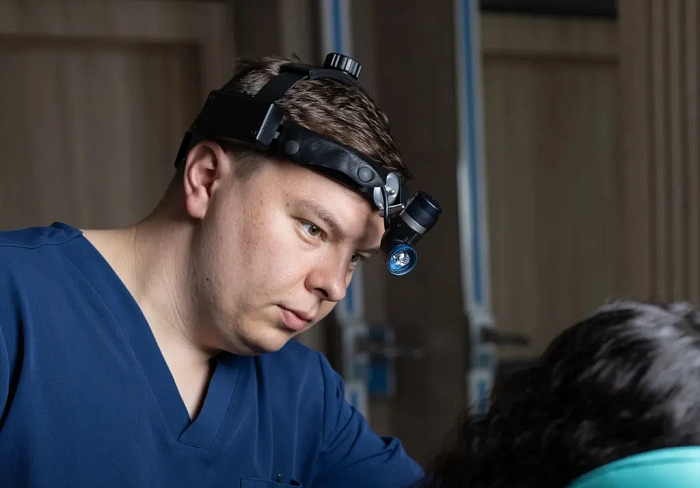
The study is performed on an outpatient basis and takes from 5 to 15 minutes. A fibroendoscope is inserted through the patient's nasal cavity. Due to the flexibility of the device, the doctor can examine all the necessary areas, minimizing discomfort.
A flexible endoscope equipped with a video camera and a light source is used for fibroendoscopy. Modern endoscopes allow you to obtain high-quality images and save them for later analysis.
After fibroendoscopy, the patient can immediately return to normal life. There may be slight discomfort or sore throat that goes away within a few hours. The results of the procedure are discussed with the attending physician, who will prescribe treatment or additional examinations.
Benefits
High information content
Allows you to get a complete picture of the condition of the studied organs.
The speed of obtaining results
The results are available immediately after the procedure, which allows you to start treatment immediately.
Low risk of complications
Fibroendoscopy is a safe atraumatic procedure.
The possibility of therapeutic manipulations
In some cases, some problems can be fixed immediately during the diagnosis.
Preparation for fibroendoscopy of the nose, nasopharynx, larynx
Usually, special preparation for fibroendoscopy is not required.

The procedure is fibroendoscopy of the nose, nasopharynx, larynx
The study is performed on an outpatient basis and takes from 5 to 15 minutes. The fibroendoscope is inserted through the patient's nasal cavity Due to the flexibility of the device, the doctor can examine all the necessary areas, minimizing discomfort.
Recommendations after fibroendoscopy of the nose, nasopharynx, larynx
After a fibroendoscopy of the nose and larynx, patients can immediately return to their usual activities.
Врачи
Смотреть всех врачейIndications and contraindications
Indications
Chronic diseases of the ENT organs
Complaints of frequent inflammation of the nose, nasopharynx, larynx, preventive examinations
Suspicion of foreign bodies
It is especially important for children and people who have suffered injuries.
Suspected tumors
To exclude or confirm the presence of neoplasms in the ENT organs.
Monitoring the treatment of chronic diseases
Evaluation of the effectiveness of the therapy and adjustment of the treatment plan.
Expected effect
Accurate diagnosis
Fibroendoscopy provides a clear and detailed image, allowing you to accurately assess the condition of the area being examined.
Identifying hidden problems
With this method, it is possible to detect diseases that are at an early stage, exclude malformations of the nose, nasopharynx and larynx in children.
Defining a treatment strategy
Depending on the detected changes, the doctor can immediately develop a treatment plan.
Minimal discomfort
Modern fibroendoscopes are quite thin (2 mm) and flexible, which makes the procedure comfortable for the patient, including examination of infants without anesthesia.
Similar referral activities
Anemia of the nasal cavity
Medical manipulation aimed at reducing blood flow in the nasal mucosa to reduce swelling and facilitate breathing.
Administration of drugs into the nasal cavity
One of the treatment methods that allows direct delivery of medicinal substances into the nasal cavity to combat infections, inflammation, allergies and other diseases of the nose and nasopharynx.
Opening of purulent formations
A procedure to ensure drainage of the infected area to alleviate symptoms and prevent the spread of infection.
Coagulation of vessels of the Kisselbach zone
A highly effective medical procedure designed to treat chronic nosebleeds caused by vascular damage in this area.
Consultation of Otorinolaryngologist
Прием ЛОР-врача, направленный на диагностику, лечение и профилактику заболеваний уха, горла и носа.
Complex treatment of patients with polypose rhinosinusitis
Are you experiencing ear, throat or nose issues? We understand how important it is to hear, breathe and speak properly, so we offer the latest diagnostics and treatment methods.
How to reach


- Route from the «Sukharevskaya» metro station
- Route from the «Tsvetnoy Boulevard» metro station
From the metro station "Tsvetnoy Bulvar"
1 exit to the city, then left to the Garden Ring, at the crossing to the right, crossing the boulevard, one more crossing and at the traffic light to the left. The Olymp Clinic building is located overlooking the Garden Ring to the right of the crossing. Travel time is approximately 9 minutes. Landmark - sign Olymp Clini
From the metro station "Sukharevskaya"
Exit 3 from the metro and 640 meters straight ahead, the clinic will be on the right. Landmark - sign Olymp Clinic
Parking lot map
Exit 3 from the metro and 640 meters straight ahead, the clinic will be on the right. Landmark - sign Olymp Clinic