

Hemorrhoid diagnostics and treatment
Effective solution to hemorrhoids: from nonsurgical treatment to minimally invasive and surgical procedures.
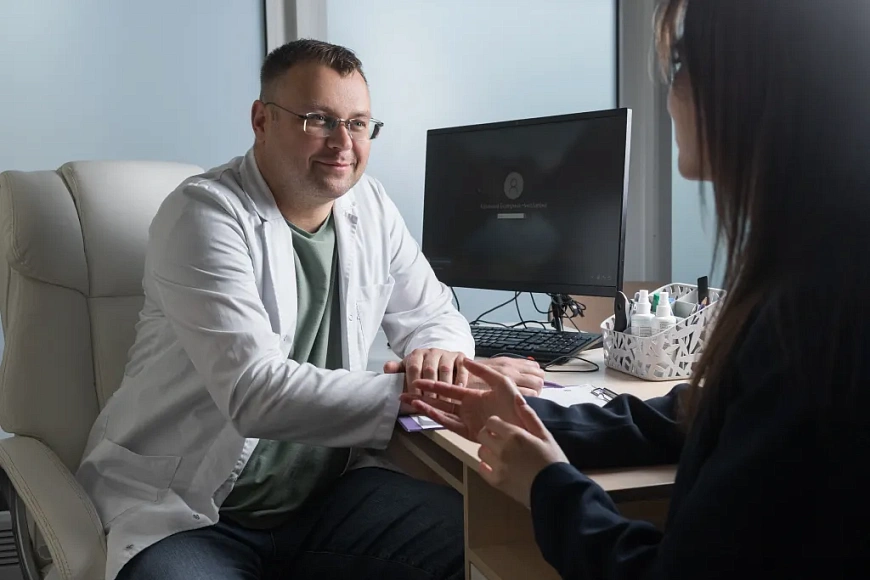
Hemorrhoids are varicose veins in the lower rectum. They cause pain, discomfort, itching, and bleeding. It is one of the most common diseases of the rectum.
The main cause of hemorrhoids is blood that doesn't flow well in the veins of the rectum. This can be caused by sitting or standing for a long time, constipation, heavy lifting, obesity, or a family history of the condition. There are different ways to treat hemorrhoids. Some methods don't require surgery. These include medications, changes to your diet and lifestyle. Later stages may require less-invasive or surgical procedures.
The diagnostic process starts with a review of the patient's symptoms, their duration, and any possible triggers. Next, there is an anal exam and a digital rectal exam. If necessary, a rectoromanoscopy or colonoscopy is performed to see inside the body and determine the stage of the disease. Additional diagnostic tests, such as blood tests, are used to rule out anemia and other possible complications.
In the early stages, nonsurgical methods are used. These include rectal suppositories and ointments to prevent constipation, medication to strengthen blood vessels, and laxatives if necessary. For more severe cases, there are minimally invasive techniques such as ligation with latex rings, sclerotherapy, and infrared photocoagulation. In cases of complications, surgery is needed to remove the swollen veins (hemorrhoidectomy).
After minimally invasive procedures, the patient can go home in just a few hours. In case of surgical intervention, hospitalization usually lasts 1-3 days. Full recovery takes 4-8 weeks.
Benefits
Complications prevention
Early treatment helps avoid thrombosis, anemia and other complications.
Safety
Advanced minimally invasive procedures minimize the risk of complications.
Improving the quality of life
Timely treatment eliminates pain, bleeding and discomfort.
Broad treatment selection
A suitable method is chosen depending on the stage and characteristics of the disease.
Diagnostics
Diagnosis begins with a conversation with the patient, during which the doctor clarifies the symptoms, the duration of their manifestation and possible provoking factors. Then the anal area is examined and a finger examination is performed. Instrumental methods, such as rectoromanoscopy or colonoscopy, allow you to visualize internal nodes and clarify the stage of the disease. Additional studies, such as blood tests, help rule out anemia and other possible complications.

Treatment
At the initial stages, conservative methods are used, including: the use of rectal suppositories and ointments, a fiber-rich diet to prevent constipation, venotonics to strengthen the walls of blood vessels, as well as laxatives if necessary. In more severe forms of the disease, minimally invasive techniques such as latex ring ligation, sclerotherapy, and infrared photocoagulation can be used. If there are complications, surgical removal of the nodes (hemorrhoidectomy) is performed.
Recovery
After minimally invasive procedures, the patient can return home in a few hours. In the case of surgery, hospitalization usually lasts 1-3 days. Full recovery takes 4-8 weeks.

Врачи
Смотреть всех врачейHow to reach


- Route from the «Sukharevskaya» metro station
- Route from the «Tsvetnoy Boulevard» metro station
From the metro station "Tsvetnoy Bulvar"
1 exit to the city, then left to the Garden Ring, at the crossing to the right, crossing the boulevard, one more crossing and at the traffic light to the left. The Olymp Clinic building is located overlooking the Garden Ring to the right of the crossing. Travel time is approximately 9 minutes. Landmark - sign Olymp Clini
From the metro station "Sukharevskaya"
Exit 3 from the metro and 640 meters straight ahead, the clinic will be on the right. Landmark - sign Olymp Clinic
Parking lot map
Exit 3 from the metro and 640 meters straight ahead, the clinic will be on the right. Landmark - sign Olymp Clinic